

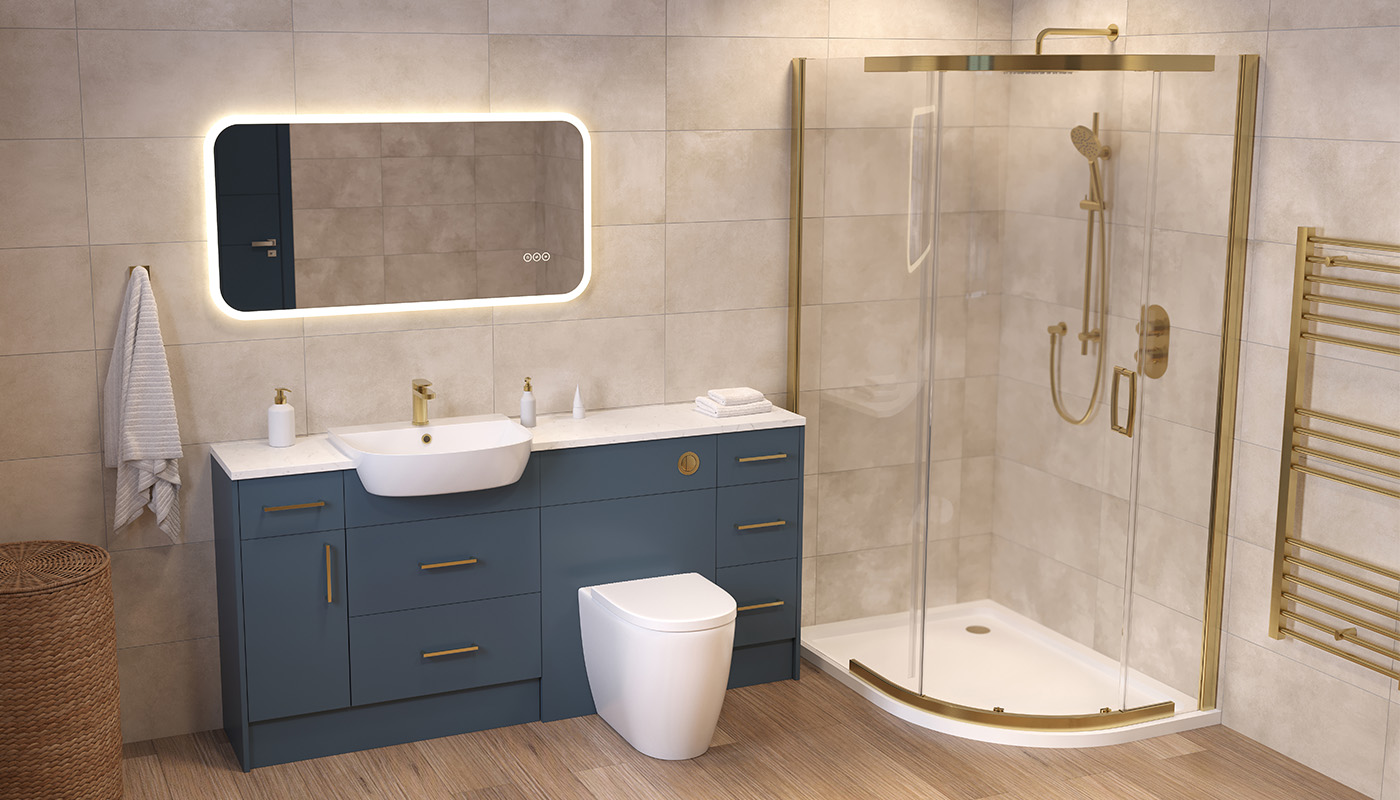
A bathroom with no windows can take a bit more thought and planning to get right. Without a window you can open for ventilation or natural daylight, the room has to be designed correctly to stay bright, welcoming and comfortable. This is particularly important if it’s a smaller en-suite or cloakroom, where you don’t have much floor or wall space to play with.
Fortunately, even without windows, you can still create a practical bathroom when the right choices are made from the start. Ventilation, lighting, colour schemes, mirrors, heating and finishing touches all play an important role in the final look and feel of the room. Here are some key considerations for this type of bathroom.
Always Start With Ventilation First
Ventilation is an important consideration in any bathroom, but it becomes even more important when there are no windows. If you can’t let steam escape through a window after a shower or bath, it will quickly build up and lead to condensation, musty smells, mould growth, or damage to finishes over time. So, a proper extraction system is essential.
Generally, an extractor fan will be enough to ventilate the bathroom, as long as you choose one that suits the size of the space and how the room is used. A small cloakroom with a toilet and basin won’t need the same extraction as a main bathroom with a bath and shower. If the room is used every day, it might be worth considering a fan with a timer, a humidity sensor, or a quiet-running feature, as these can make it easier to keep the room clear.
It’s also important to ensure the fan is installed correctly and vents to the right place. More often than not, it’s beneficial to get some professional advice and hire a qualified installer for this part of a bathroom renovation. In a windowless bathroom, ventilation is one of the main features that keeps the room healthy, comfortable and easier to maintain, so it needs to be right.
Choose Lighting That Replaces Natural Daylight
Lighting needs more attention in a bathroom with no windows because there isn’t any natural light to brighten the space. A single ceiling light might be enough for general lighting, but it can leave shadows around the basin, shower or bath area. This can make the room less practical, especially when getting ready in the morning.
Layered lighting is a better approach. Start with good overhead lighting so the room feels bright and welcoming. Then add strategically placed task lighting around the mirror to help with skincare, makeup or daily grooming. An illuminated bathroom mirror can be a useful choice as it provides lighting exactly where it’s needed and prevents the need for extra fixtures. You can then incorporate additional accent lighting to add visual interest or highlight focal points. This can be particularly useful in larger bathrooms where you have space for decorative touches.
The tone of the lighting is important too. Cooler white lighting can help a windowless bathroom feel brighter, while warmer lighting can make it feel softer and more relaxing. The best choice depends on the style you want to create, but it’s best to aim for lighting that feels practical without being too harsh.
Use Mirrors to Add Light and Depth
Hanging mirrors are one of the simplest ways to improve a bathroom with no windows. They reflect artificial light around the room and help to prevent the space from feeling boxed in. Even in a smaller en-suite, a mirror above the basin area can be really effective.
As mentioned above, an LED mirror can be especially useful because it combines reflection with extra lighting. Some illuminated bathroom mirrors also include features such as demister pads, touch controls, shaver sockets, and speakers. A demister pad is worth considering for a windowless bathroom because mirrors can steam up quickly without natural airflow.
The shape of the mirror can also make a difference to the overall space. A rectangular mirror gives a clean, practical look and offers plenty of reflection. A round or oval mirror can soften a room with lots of straight lines, while a pill-shaped mirror can make the most of vertical space above a vanity unit. It’s best to choose the mirror based on the available wall space, the width of the basin and how much light you want to reflect back into the room.
Choose Colours that Help the Room Feel Brighter
When you don’t have any windows, colour can help do some of the work that natural daylight would usually do. It’s typically best to start with a light base, such as off-white or pale grey. These shades help reflect light and make the room feel more open.
While a light base is recommended, this doesn’t mean the bathroom needs to be plain. A completely white bathroom can sometimes look a little cold under artificial lighting, so it helps to bring in warmth through accent colours, whether it’s on the walls, in furniture or with accessories. A tiled splashback, wood-effect vanity unit, or patterned towels can add visual interest without making the room feel darker.
Darker colours can still work in some bathrooms, but use them carefully. Adding a black shower frame, basin tap or towel rail can add contrast, while keeping the main surfaces lighter can help the room stay fresh and easy to live with.
Use Finishes that Reflect Light
Similarly to mirrors, certain finishes can help to reflect light in a windowless bathroom. Gloss surfaces, clear glass and polished metal fittings can help artificial light bounce around the room, making the whole space feel brighter. This is especially useful in smaller bathrooms where there is limited wall space for a large mirror.
A frameless glass shower door or wet room panel is a good option because it keeps the shower area visually open. Chrome or brushed brass taps and accessories can also work well because they reflect light and suit most bathroom styles. These finishes can help to prevent the room from feeling too enclosed.
While reflection is a good thing, avoid making every surface shiny. Too much gloss under artificial lighting can feel harsh and, depending on the material, show water marks more easily. A balanced mix usually works best. For example, you might use a large glass shower screen with a matt vanity unit, or chrome taps with softer stone-effect wall panels.
Plan the Shower Area Around Steam and Splashing
The shower area needs careful consideration in a bathroom with no windows, as it is usually where most of the steam is generated. A good extractor fan will help, but the shower layout also needs to help control water and make the room easier to dry after use.
For smaller bathrooms, a sliding shower door, a bifold shower door, or a quadrant shower door can be a practical choice as these styles save space and help contain water. If the space allows, a walk-in shower with a wet room panel can create a more open feel, but it still needs to be planned properly so water doesn’t spread across the floor.
It’s also useful to think about the shower tray. A low-profile shower tray can make the space feel more modern and streamlined, which is ideal for family bathrooms, wheelchair access, and elderly users. The best option is one that fits the room comfortably, keeps water under control and is easy to wipe down after use.
Make Heating Part of Moisture Control
Heating isn’t just about comfort in a windowless bathroom. It also helps the room dry out properly after baths and showers. When warm air, good ventilation and sensible product choices all work together, the bathroom is much less likely to feel damp.
A heated towel rail is one of the most useful additions because it gives you somewhere to dry towels while also making the room much warmer. Damp towels can make a windowless bathroom feel unpleasant, so having a dedicated place for them makes a real difference. Make sure the towel rail is close enough to the shower or bath to be useful, but not so close that it blocks movement.
In smaller bathrooms, a wall-mounted towel rail can be a more space-efficient choice than a standard radiator. Another option to consider is underfloor heating. This is incredibly energy-efficient and helps provide consistent warmth throughout the room, minimising the risk of condensation, damp, and mould.
Design a Windowless Bathroom with Bathroom Supastore
While a bathroom with no windows needs a little extra planning, it can still feel bright and comfortable. When working on a renovation, start with ventilation, then build the design around good lighting, reflective surfaces, and products that help the room dry out properly.
At Bathroom Supastore, we can help you choose products that suit this type of space, from LED bathroom mirrors and slimline shower enclosures to vanity units, taps, heated towel rails, shower trays and wet room panels. The right combination can make a big difference to how the room looks, feels and functions every day.
If you’re updating a windowless bathroom, explore our website today for more inspiration, or get in touch with any questions about the products you’re interested in.