

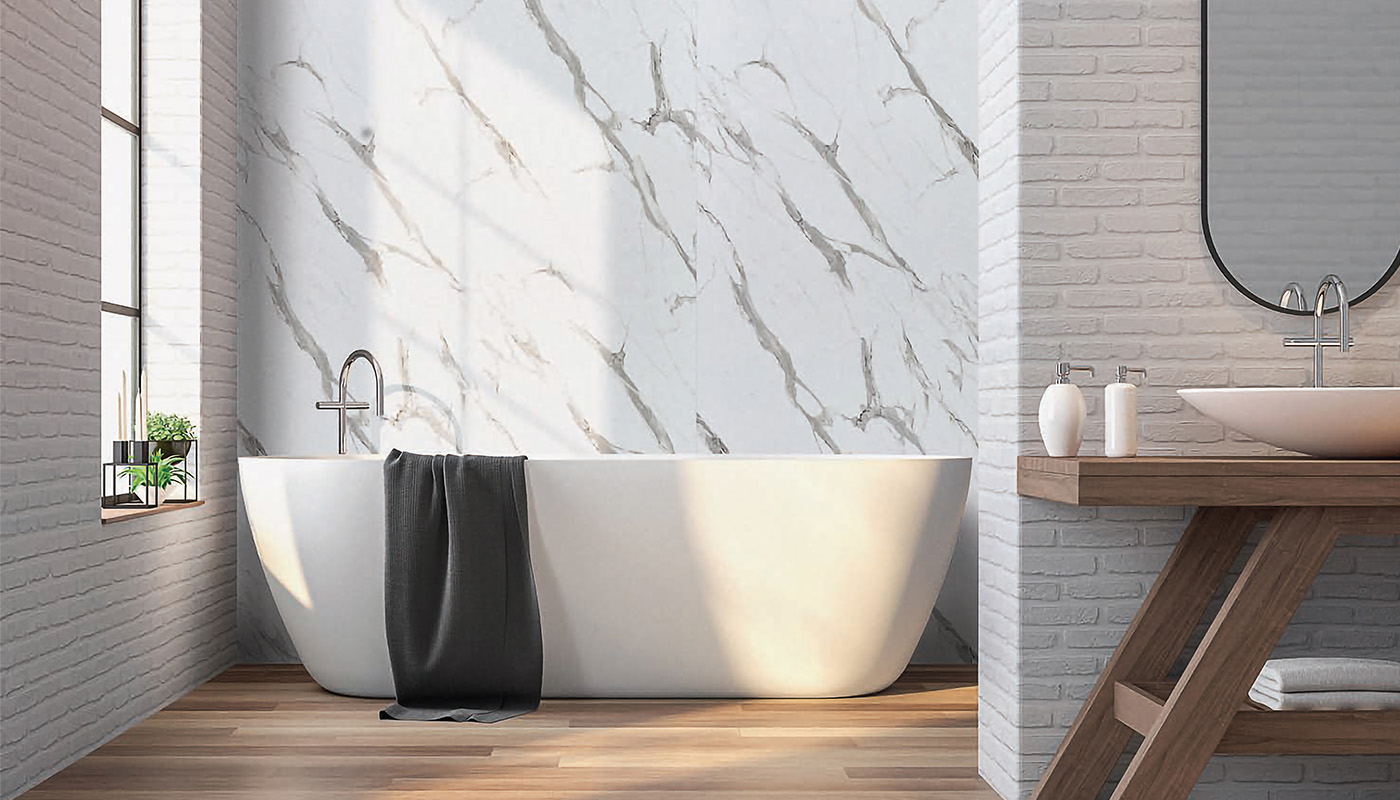
Bathroom wall panels are an excellent choice if you want a stylish bathroom that doesn’t require a lot of maintenance. They are incredibly easy to install, usually over the top of existing tiles, and provide a practical finish that will continue to look good for years to come.
Whether you’re interested in PVC wall panels that mimic natural stone or slatted wall panels with a natural wood finish, there are fewer areas for soap residue, moisture and everyday debris to collect. They are perfect for walls and ceilings, providing a modern look while making day-to-day cleaning much more straightforward.
That said, even low-maintenance wall panels still need the right care. While you don’t need specialist products or complicated routines, knowing what to use, what to avoid, and how often to clean them will help keep them looking as good as possible.
Why Bathroom Wall Panels are Easier to Look After
Wall panels create a much smoother surface than tiles. These decorative wall coverings have fewer joints and no traditional grout lines, meaning there are fewer places for dirt, soap, and moisture to build up. This can make a real difference in busy bathrooms, especially in shower enclosures or around baths, where splashes are part of daily life.
PVC panels are particularly popular because they are practical, lightweight and available in a wide range of styles. You can recreate the appearance of many natural stones, from marble to slate, without taking on the same level of maintenance. You can even purchase tile-effect wall panels, providing the traditional look with much less hassle.
Wooden slat wall panels are also becoming a popular choice for bathrooms, particularly for feature walls. Slatted designs can bring warmth, depth and texture to a space. However, they need a slightly different cleaning approach to maintain their appearance.
Start with Warm Water and a Soft Cloth
For everyday cleaning, warm water and a soft cloth are usually all you need. This should be enough to remove water spots, light marks, and surface dust from most bathroom wall panels without needing anything stronger.
Generally, it’s best to wipe gently rather than scrub as this helps protect the surface finish. Regular light cleaning also prevents soap residue from building up, so you are less likely to need other cleaning products in the future.
Most bathroom panels don’t need polishing or special treatments. However, if you live in a hard-water area, it can help to dry the panels with a fresh cloth after cleaning, as this reduces streaks and keeps the surface looking brighter.
Use a Mild Cleaner for Soap Residue
Bathrooms naturally have soap marks, shampoo residue, and toothpaste splashes. If warm water isn’t enough to clean wall panels, you can use a mild, non-abrasive cleaner.
A small amount of washing-up liquid mixed with warm water, for example, can work well for general cleaning. You can also use a gentle bathroom cleaner, as long as it’s suitable for your type of panelling. If you are unsure, check the product guidance or test a small, hidden area before cleaning an entire wall.
When you’re cleaning, rather than leaving the product sitting on the surface, wipe the area, rinse with clean water and dry with a soft cloth. This simple approach helps remove residue without leaving a film behind.
Clean Slatted Wall Panels with a Little More Care
Slatted wall panels can make more of a statement in your bathroom, especially if you want to add texture rather than have a completely flat wall finish. However, the grooves that create the slatted look need slightly more attention than a smooth PVC panel.
Our Slatwall range at Bathroom Supastore is designed for bathrooms, providing both style and practicality. The waterproof design is engineered to withstand moisture, humidity, and splashes, and it's a long-lasting solution that resists warping, cracking, and fading over time.
For cleaning, we still recommend keeping things simple. Use a damp cloth across the face of the panel and a soft brush to clean inside the grooves. If you need a cleaner for more stubborn marks, choose a mild detergent and avoid soaking the surface. Light, regular cleaning will usually be enough to keep them looking fresh without damaging the finish.
Avoid Harsh Products and Rough Cleaning Tools
The wrong cleaning products can easily do more harm than good. Strong chemicals and rough pads can scratch, dull or damage decorative finishes. We would avoid:
-
Wire wool or scouring pads
-
Hard-bristled brushes
-
Abrasive cleaning products
-
Strong solvent-based cleaners
-
Bleach-heavy products
Even if a mark is difficult to remove at first, don’t attack it with a rough tool straight away. Instead, be patient. Soften it with warm water, then gradually clean it with a mild product. If you’re even unsure about what you can and can’t use, check the manufacturer’s recommendations. This is the safest way to protect your bathroom panels.
Do Not Forget Joints, Trims and Sealant
Wall panels are much easier to maintain than traditional tiled walls, but the edges still need attention. Joins, trims and sealant lines can collect moisture or product residue over time, particularly in shower and bath areas.
When cleaning, run a soft cloth along the trims and around the edges. Avoid using sharp tools to dig into joints, as this could affect the seal or damage the finish. If sealant has started to lift, crack or discolour, it’s better to deal with it early. Good sealing not only helps protect the surrounding area, but makes the whole bathroom look fresher.
It always helps to keep the bathroom well ventilated after showers and baths. Opening a window, using an extractor fan or leaving the door open for a while can reduce lingering moisture and the damage it can cause.
How Often Should Bathroom Wall Panels Be Cleaned?
How often you clean your wall panels depends on how often the bathroom is used. A main family bathroom will usually need more regular cleaning than a guest en-suite. Similarly, a shower enclosure will need more regular care than a decorative feature wall.
As a general guide, bathroom panels benefit from a quick wipe after each use, especially in hard-water areas. A more thorough clean once a week is usually enough for most busy homes. Yet, panels around the basin, toilet or bath can benefit from being cleaned as soon as visible marks appear to prevent residue build-up.
Regular cleaning is often much easier than trying to remove more stubborn marks later. If your panels start to look dull between cleans, it’s usually a sign that soap, hard water or cleaning product residue has built up on the surface. Start with warm water and a soft cloth, then use a mild cleaner if needed. Rinse and dry the panels properly afterwards, rather than trying to restore the finish with polish, abrasive creams or strong chemicals.
Choose Low-Maintenance Wall Panels from Bathroom Supastore
All in all, bathroom wall panels are a practical choice for anyone who wants a stylish space without spending too much time or effort cleaning. They provide a smooth, modern finish and can work beautifully in shower areas, feature walls, cloakrooms and family bathrooms.
At Bathroom Supastore, we offer a wide range of wall panelling options, including PVC wall panels, slatted wall panels, trims and accessories to help you create your dream bathroom. Our high-quality panels offer a hassle-free way to achieve a high-end look, keeping ongoing maintenance as straightforward as possible.
If you are planning a bathroom update, explore our bathroom panels online or get in touch with our team if you have any questions about how this modern wall covering works.