

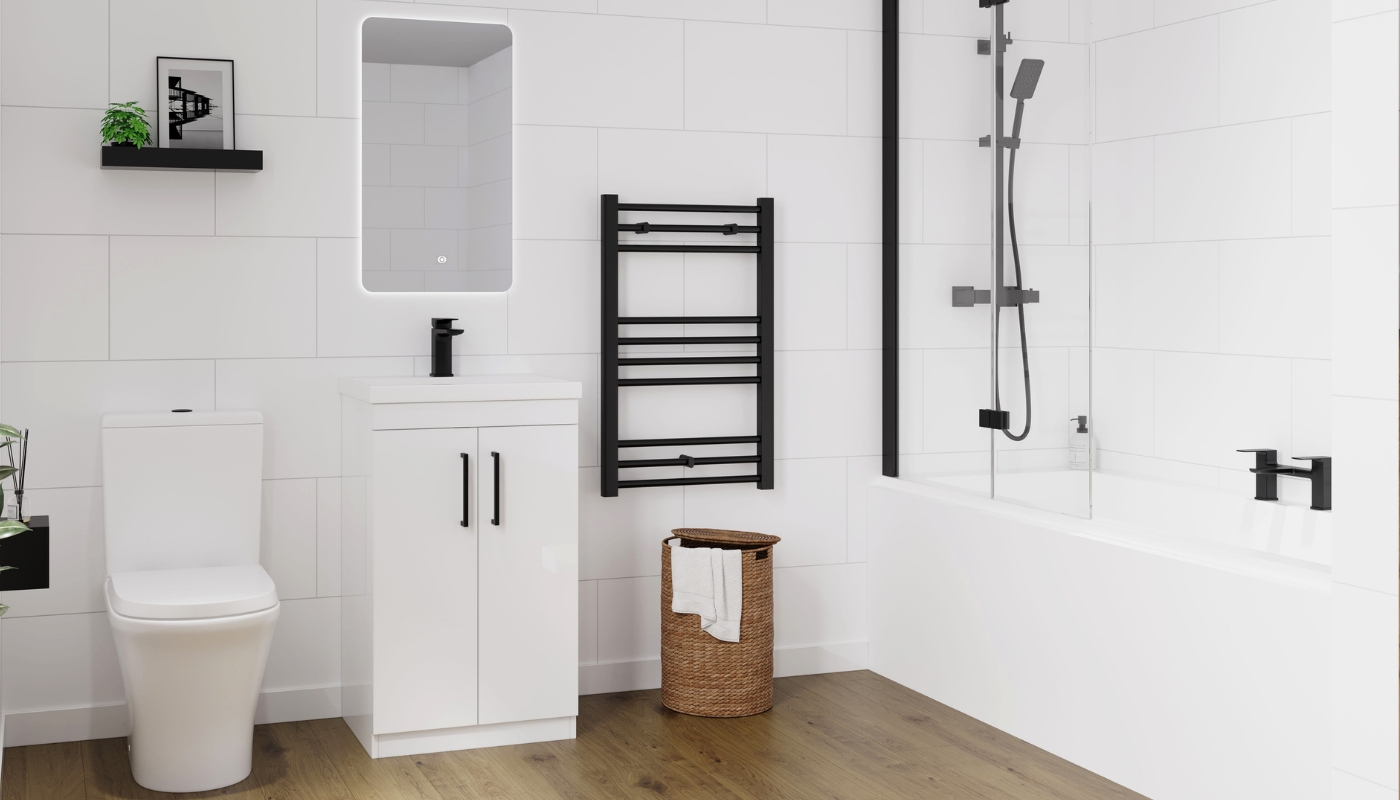
Heating a bathroom isn’t always as straightforward as heating a bedroom or living area. This room tends to lose heat faster because of the tiled surfaces, external walls, windows, and extractor fans, and heating can often be an afterthought when renovating a bathroom.
On top of this, people usually want two things from bathroom heating: a room that feels comfortable year-round and towels that dry properly between uses. Heated towel rails remain a popular option and can work very well, as long as they are chosen with the space in mind.
A towel rail might look perfect on the wall, but if its output is too low, it’s not necessarily a suitable solution for heating the whole room. In smaller, well-insulated bathrooms, a towel rail can be enough, but in larger, colder or more draughty spaces, you might need another heat source. So, you shouldn’t choose bathroom heating based on appearance alone.
Can a Towel Rail Heat a Bathroom on Its Own?
In many cases, a designer towel radiator can be the main heat source in a bathroom, but it’s important to choose a BTU output that suits the space.
The difficulty is that bathrooms can vary more than people think. A compact ensuite with good insulation is very different from a family bathroom with high ceilings, an outside wall, and a single-glazed window. Even if both rooms can physically accommodate the same-sized towel rail, they won’t require the same level of heat.
This is why BTU (British Thermal Unit) matters so much. It’s the standard way to measure heat output for radiators and towel rails, and a correct BTU calculation takes into account room dimensions, indoor and outdoor temperatures, and the quality of insulation. If the output is too low, the room might never feel warm enough. If it is too high, you may end up spending more on heating than necessary.
As an example, a 400 x 1000mm heated towel rail with a heat output of 942 BTUs might work for a small cloakroom or ensuite. However, a 500 x 1512mm designer towel radiator with a heat output of 3061 BTUs might be more suitable for a main bathroom.
What Affects Whether a Towel Rail Will Heat the Room?
Before you choose a towel rail for your bathroom, it helps to look at what actually affects heat output. A heated rail may work well in one space but struggle in another, even when the rooms seem fairly similar at first glance.
Bathroom Size
This is always the first thing to consider. The larger the bathroom, the more heat it will usually need. A slim towel rail may fit neatly beside a basin or shower enclosure, but it might not necessarily produce enough warmth for the whole room. It’s important to consider heat output as well as the radiator's physical size.
BTU Output
As mentioned above, this is a key factor. A towel rail will only work as the main heat source if its BTU output matches the bathroom's requirements. We recommend checking the product specification and comparing it with the BTU needed for the room before making a final choice. A towel rail that looks the part can still leave the room feeling cold if the output is too low.
Insulation and Heat Loss
The room itself makes a big difference. A modern bathroom with good insulation and double glazing will usually hold heat better than a room with draughts, older windows or more exposed walls. Features such as external walls, glazing, and uninsulated spaces above the ceiling can increase heat loss, which may mean a higher BTU output is needed.
Ventilation and Moisture
Bathrooms naturally lose more heat than other rooms because they need regular ventilation. Extractor fans and open windows help with steam, but they also remove warm air. When you add wet surfaces and damp towels, the heating has to work harder to keep the room comfortable. This is one reason bathroom heating needs a little more thought.
How the Towel Rail Will be Used
This is something many people overlook. If the towel rail is regularly covered with thick, damp towels, part of its heat output will be used to help dry them rather than warm the rest of the room. That isn’t a problem, as it’s one of the main benefits of a towel rail, but it can affect the overall temperature of the bathroom. In a busy household, this can make a larger towel radiator or a standard radiator the better choice than a smaller towel rail.
Why Towel Rails are Popular in Bathrooms
Heated towel rails remain one of the most popular choices for bathrooms because they do more than provide heat. They help keep towels warm and ready to use, while also improving everyday comfort. For many homeowners, this makes them a natural fit for bathroom spaces.
They’re also popular because of how well they suit modern bathroom layouts. Most towel rails are vertical, which means they take up less wall space than standard radiators. The tall, narrow shape works particularly well in smaller bathrooms, cloakrooms and ensuites where every bit of space matters. The ladder design also makes it easy to hang towels after each use.
This combination of practicality, compact size, and style is exactly why so many people choose a designer towel rail or towel radiator when planning their bathroom heating.
The Pros of Choosing a Towel Rail
A towel rail can be a great choice in the right bathroom, especially if you want heating to do more than just warm the room. Key benefits include:
-
Better use of wall space - Bathrooms often have limited space once the main fixtures are in place. A vertical towel rail makes better use of wall height, which is helpful in smaller bathrooms, cloakrooms and ensuites.
-
Warm, dry towels - One of the biggest benefits is everyday comfort. Towels feel better to use when they are warm, and a heated rail can also help them dry more quickly between uses, especially in the winter.
-
A neater overall look - Modern designer towel radiators can feel more in keeping with the rest of the bathroom than a standard horizontal radiator. They add heat without looking bulky or out of place.
-
A range of heating options: Nowadays, towel rails are available in central-heating, electric, and dual-fuel models. This offers more flexibility, especially if you want warm towels when the main heating is off.
The Cons of Choosing a Towel Rail
While towel rails work well in many bathrooms, they aren’t always the best solution for every space. Things to keep in mind include:
-
Heat output can be overlooked - Some people choose a towel rail based on size or appearance without checking whether it produces enough heat for the room. This can leave the bathroom colder than expected.
-
They have more than one job to do - A towel rail is designed to heat the room, but it is also used to warm and dry towels. Since some of the heat goes into the towels, it may not always feel as effective as a standard radiator.
-
They may not suit larger or colder bathrooms - In bigger bathrooms, older homes, or rooms with more heat loss, a standard radiator often provides more reliable warmth. In these situations, a radiator or higher-output towel rail may be the better choice.
When a Radiator is the Better Choice
A standard radiator is usually the better option when your main goal is to heat the room efficiently and consistently. This often applies when:
-
The bathroom is larger than average
-
The room has higher ceilings
-
There is more than one external wall
-
The insulation is poor
-
The room loses heat quickly through windows or ventilation
-
You want the best possible heat output from a given wall area
In these situations, a designer radiator often gives you more confidence that the room will feel warm enough in day-to-day use. You can still choose something stylish, and it doesn’t have to mean compromising on appearance.
Practical Advice Before You Choose
Before choosing bathroom heating, it helps to get the basics in the right order. A towel rail might look perfect in the space, but if the output is too low for the room, it will never perform as well as you need it to.
We always recommend starting with the room's heat requirement, then checking how much wall space you actually have to work with. After that, think about what matters most to you in day-to-day use. In some bathrooms, the priority is simply keeping the room warm. In others, it’s having dry towels as well.
Once you know those three things, it becomes much easier to choose the right solution with confidence. It also helps avoid one of the most common mistakes: choosing a towel rail based on appearance or fit without properly considering whether it will produce enough heat.
Heating Your Bathroom with Bathroom Supastore
If you’re currently deciding between a towel rail and a radiator, the answer usually comes down to heat output, room size and how you use the bathroom. A towel rail can heat a bathroom effectively, but only when it is properly sized for the space.
At Bathroom Supastore, we offer a wide range of bathroom heating options, including heated towel rails, designer towel radiators, and other practical heating choices to suit different layouts and budgets. If you’re planning a new bathroom or updating an existing one, start by exploring our heating range and don’t hesitate to get in touch if you need some help choosing a product that will heat the space properly as well as look the part.